Piikani Wind Project.

We are exploring the Piikani Wind Project on Piikani Nation lands.

The Nation’s location is well suited for renewable energy. It is a gateway to the Rocky Mountains with Highway 3 running through its lands, and it has strong wind resources that could generate clean electricity while respecting the land and environment.

Wind energy on Piikani Nation lands could create new opportunities, support local businesses, and bring lasting benefits to the community. The planning reflects the heritage and values of the Piikani Nation and the Nation’s deep connection to the land.

PRDL continues to study the opportunity for a wind power project on the Nation. We hope the information package helps answer frequently asked questions.

Information packages are available at the PRDL office, and we welcome questions from Nation members.

Download 2026 FAQ document (PDF format)

Download 2023 FAQ document (PDF format)

90-150 MW

Wind Power Project Size Estimate

120 metres (394 ft)

Tower Height

30 Years

Wind Turbine Life Span

Frequently Asked Questions.

PRDL would like to build a utility-scale wind power project and a project substation connected to the Alberta electrical grid. The wind power project will generate electricity and environmental attributes that will be sold.

The wind power project will include wind turbines, access roads, an electrical collector system, and a project substation. It will also include meteorological towers that measure wind speed and wind direction.

We anticipate the wind power project size to be between 90-150 MW.

For an area to be good for building a wind power project, it must have enough wind. But that’s not the only thing that matters. We must also consider the people, the environment, and more.

When deciding where to build a wind power project, we must consider how it might affect the people and the environment around it. Some places are not good for building wind power projects because they might be too close to homes, wildlife, or places important to Piikani Nation traditions. We use these locations to determine the setbacks for where the wind power project can be built. We must keep a certain amount of space between the wind power project to ensure homes, wildlife, and places important to traditional locations are not impacted.

We also must think about other things like how far away the wind power project will be from power lines and roads, and how far apart the wind turbines are.

In 2012, PRDL hired engineers to help us find specific lands to build a wind power project. Piikani Nation identified places important to our traditions. We want to make sure we don’t impact those places.

In 2019, PRDL installed a meteorological tower to measure wind speed, direction, temperature, and atmospheric pressure. This information was used to figure out how much wind there was in different locations on Piikani Nation lands. We found out there is enough wind to build a wind power project and figured out which places have the best wind.

After looking at different places, the engineers found three areas where we could build a wind power project. Two areas were not big enough or too close to homes. The best area was in the hay lease lands.

This location was chosen because it had land where we could put the wind turbines, and it would not impact homes, the environment, or traditional places important to Piikani Nation.
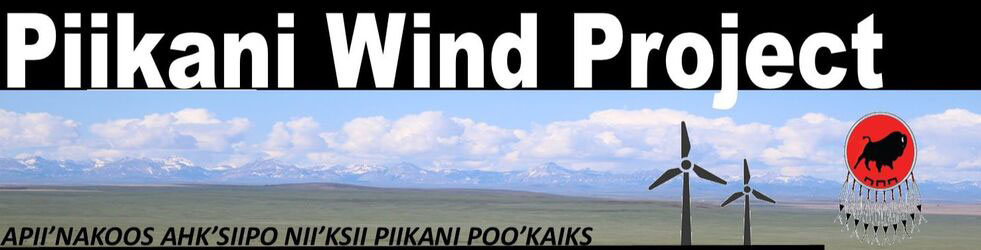
The wind power project will be located on the reserve lands. The wind turbines will be visible from many parts of the reserve.

We will also use special lights on some of the wind turbines to keep airplanes safe, especially at night.

Sometimes the spinning blades can create shadows that flicker when the sun is low in the morning or evening.

If you are in the area near the wind power project, you might sometimes hear a “swoosh” sound from the spinning blades. But we have ensured that the noise will not be too loud.

Wind turbines use the wind that blows over the land to make electricity. Wind turbine blades use the energy in the wind. When the wind blows over the blades, they create lift. This makes the blades turn, which spins a generator and makes electricity. The wind turbine turns so that it faces the wind directly to capture the most energy from the wind.

The wind turbine blades are built to be very light and strong to capture the most energy from the wind. They can be long — up to 80 metres (262 ft) each! A wind turbine has different parts like the blades, hub, gear box, and generator inside the nacelle. The wind turbine also has a tower and foundation. The tower can be tall — up to 120 metres (394 ft).

The electricity generated by each wind turbine is sent to a project substation. At the project substation, the electricity is transformed to a higher voltage and connected to transmission lines.

We will support Piikani Nation businesses by buying goods and services from our Nation during the construction and operation of the wind power project. This will help support our local businesses and economy.

The wind power project will create jobs for service and operations personnel. During the construction and operation of the wind power project, there will also be opportunities for local contractors who are qualified for the job. This will provide employment opportunities in our community.

The wind power project is expected to make money, and we want to use that money to benefit the whole Piikani Nation. Later on, we will provide Piikani Nation with more detailed information about how the wind power project revenues will be used.

PRDL will go through a process to find a buyer for the power.

PRDL may look for a partner to work with us on this project, and we will negotiate with funding agencies and banks to get the best deal possible.

In 2009, AltaLink and the Piikani Nation worked together to set up the PiikaniLink and Peigan 59S substation. The Peigan 59S substation was built for a 240kV transmission upgrade with the potential to connect renewable energy projects. The Piikani Nation appreciates the possibility of using the existing on-reserve substation infrastructure for future wind or other projects.

In May 2021, we hired an outside consultant to help us evaluate alternatives for connecting the wind power project to the electrical grid. PowerEN looked at how much electricity the grid could handle, how reliable the connection would be, and the risk of the wind power project being asked to produce less electricity.

The alternatives identified include connecting to Peigan 59S or Windy Flats 138S substations. The process to determine how our wind power project will be connected to the electrical grid will be decided through a five-stage process by the Alberta Electric System Operator.

We received funding from Natural Resources Canada through the Smart Renewables and Electrification Pathways Program for development of the wind power project. We found the best location for the wind power project and have completed one year of the required environmental surveys.

The potential investment in the wind farm will go through a five-stage review process and will be backed by a thorough analysis and consideration of factors that will impact the success of the investment:

  1. Investment Proposal Stage;
  2. Initial Screening Stage;
  3. Business Case Development Stage;
  4. Investment Decision Stage;
  5. Post-Investment Review Stage.

We are currently in the Initial Screening Stage and the Business Case Development Stage.

PRDL is evaluating the feasibility of the wind power project, including factors such as site location, wind speed, access to transmission lines, and environmental and regulatory considerations. We will start a more detailed analysis to show a business case for the wind power project. This business case will be necessary for PRDL and the Council to evaluate and determine if the benefits are worth the costs at the “Investment Decision Stage”.

  • PRDL plans on filing our application with the Alberta Utilities Commission before the end of 2023. We also plan to consult with the Piikani Nation Membership. Members can contact PRDL with any questions or comments.
  • We have met with Indigenous Services Canada to confirm the environmental work for the wind power project.
  • We will also apply for interconnection to the Alberta Electric System Operator.
  • We will ensure we have Council approval throughout the development of this wind power project.

Piikani Nation will own all or the majority of the proposed wind turbines. PRDL may look for a partner to work with us on the wind power project.

Everyone will receive the same information during this consultation process. We want to make sure that everyone has access to accurate and current information about the wind power project. We also want everyone to feel free to provide comments or ask questions about the wind power project.

As part of the Alberta Utilities Commission process, we will provide the same information to non-Nation member stakeholders located off-reserve within 1.5 km (1 mi) of the wind power project boundary. We will provide this information to these stakeholders between May and June 2023.

The Piikani Nation will use the Alberta Utilities Commission Rule 012 to assess the noise from the wind power project. We will complete a noise study and ensure the wind turbines follow these rules when running. We will integrate the noise from the existing wind power projects into this study, including Weather Dancer.

After a wind power facility is built, there may be a need to confirm the noise levels to ensure they meet the regulations. This is called post-construction noise monitoring.

We will model how the wind power project sound may affect the area. We will also model any nearby equipment such as wind power projects that make noise, including Weather Dancer. This is to make sure they don’t make too much noise altogether.

There is no evidence to show that wind turbines harm human health. Wind energy remains one of the safest and most environmentally-friendly forms of electricity generation. Many scientific studies have reached this conclusion.

A study released in 2014 by Health Canada, “Wind Turbine Noise and Health Study,” [1] concludes that there is no evidence that exposure to wind turbine noise causes self-reported medical illnesses and health conditions. Specifically, the Health Canada study finds the following:

  • No evidence supports a link between exposure to wind turbine noise and self-reported illnesses and chronic conditions.
  • There is no association between wind turbine noise and self-reported or measured sleep quality.
  • There is no association between wind turbine noise and any significant changes in reported quality of life, overall quality of life, or satisfaction with health.
  • There is a correlation, but no causal relationship, between increasing wind turbine noise levels and annoyance. The Health Canada study identifies other factors contributing to the annoyance of living around wind turbines, including the visual appearance of the turbines, and noise sensitivity.

The AUC Rule 012 minimizes the potential for any sleep disturbance. A study by the World Health Organization on noise and sleep found that noise levels below 40 decibels during the night are unlikely to have much of an effect on sleep.

40 decibels is the nighttime noise limit for rural homes under the AUC Rule 012 requirements. The Alberta Utilities Commission Rule 012 assumes the ambient noise levels are 35 decibels. For comparison, this is quieter than a new dishwasher.

The noise from the wind turbines must follow certain rules in Alberta to ensure that it doesn’t disturb people’s sleep.

Fires at wind turbines are rare. But just in case one happens, we will have an emergency response plan to respond quickly and keep people and properties nearby safe. Before construction, we will develop an emergency response plan with emergency services, including the local fire department.

During the wind power project construction, we will take steps to make sure people are safe. We will have security and information to help people avoid the construction site. We will also control dust and traffic near the construction site.

A plan to address the safety of wild horses, grazing horses, cattle, and workers in the wind power project area will be made.

We will work in consultation with the Piikani Nation Land’s Department and CY Ranch to address the safety of the livestock.

We will share pictures to show what the wind power project will look like once the layout is complete.

Shadow flicker happens when the spinning blades of the wind turbines make long shadows. Studies show that shadow flicker doesn’t impact people’s health. It only happens for short times and depends on the position of the sun and clouds. We will study the shadow flicker for the wind power project and predict how much shadow flicker there will be. We will also look at how the amount of shadow flicker might change if there are clouds or if the blades aren’t spinning.

During the construction phase of the wind power project, there will be more vehicles on the roads and there may be times when roads are closed temporarily for moving people, equipment, and materials. We will create a plan to reduce the impact of traffic on the community.

We will work with local contractor services to manage any dust generated during construction.

We will work with local contractor services to manage weeds during the construction of the wind power project.

We studied the animals and birds living in the area where we want to build the wind power project and found the places where birds make nests and mate. To protect birds, we will keep the wind turbines and project equipment a safe distance away from these areas. We will align our setbacks with Indigenous Services Canada. We will also align our setbacks with the Alberta Environment and Parks Wind Wildlife Directive.

We looked at different types of surveys for the whole wind power project area, including surveys of bird migration, bat migration, breeding birds, and sensitive species.

Post-construction wildlife monitoring is a standard requirement of wind power project developers in Alberta. We will consult Indigenous Services Canada to create a post-construction monitoring program. It may be aligned with Alberta Environment and Protected Areas (AEPA).

A plan to address the preservation or improvement of the existing native grassland within the wind power project area will be implemented.

The area where we would like to build the wind power project has been used for horses and other livestock. The grasses in this area include Blue grama, fringed brome, Sprengel’s sedge, Parry oat grass, bluebunch fescue, western porcupine grass, June grass, and western wheat grass. There will be some impact on the grasslands during construction and less impact during operations. We can use native grass seeds to reduce any possible impact to the land.

The livestock and horses can continue to use the land in and around the turbines after the wind power project is constructed.

There is no evidence of wind turbines affecting livestock in Alberta. The Pembina Institute researched and found that wildlife and livestock sometimes like to stand in the shade of wind turbines during the day.

We will work with Environment and Climate Change Canada, the Department of National Defense, Royal Canadian Mounted Police, Environment and Climate Change Canada, NAV CANADA, and the Peigan Board of Education to make sure these radar systems or communications channels are not affected by the wind turbines.

The Weather Dancer wind turbine was a test wind turbine and pilot project. We are using what we learned from Weather Dancer for this wind power project. Weather Dancer has a separate connection to the electricity grid. This will be a completely new wind power project built on Piikani Nation lands. The new wind power project will be located near Weather Dancer.

Decommissioning is when the wind power project is taken down, and the lands are returned to their original condition.

At the end of the wind power project’s life, the wind power project owner is responsible for taking it apart in a process called decommissioning. This means taking apart the turbines and removing foundations below one metre. Access roads may also be removed if they are no longer needed.

Wind turbines are made to last around 30 years. However, the wind that powers the turbines does not run out, so new turbines can be installed at the same site. We will recycle or find new uses for the materials used in the old turbines.

We will set up a fund before the wind power project is built to pay for decommissioning the facility in the future once the facility is no longer needed or is too old. The metal and parts that can be used again will be sold to help pay for decommissioning.

Piikani Wind Project